

Central Michigan University Athletics
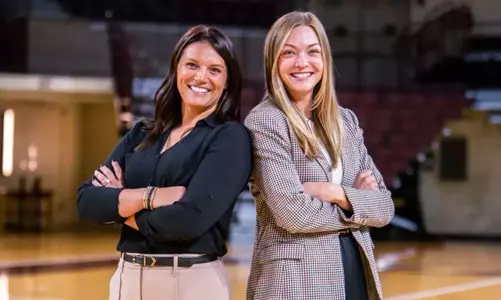
Photo by: Josie Ransley '25,M'27 - @josieransmedia
Mental Health Awareness Week: Cecily Barnaud and Dr. Megan Manierski Support Central Michigan Athletics
10/9/2026 11:45:00 AM | General, Our Stories
Cecily Barnaud of the CMU Counseling Center and Dr. Megan Manierski of MyMichigan Health provide mental health and wellness support for Central Michigan’s more than 450-plus student-athletes.
MOUNT PLEASANT, Mich.—More than 1 in 5 U.S. adults experience mental illness and 1 in 20 experience serious mental illness each year, according to the 2025 National Alliance on Mental Illness (NAMI) survey "Mental Health by the Numbers." These statistics show that mental illness is common and affects millions of Americans each year.
CMU Athletics supports student-athlete mental health in collaboration with the CMU Counseling Center and MyMichigan Health. Cecily Barnaud, the CMU Counseling Center's dedicated student-athlete counselor, and Dr. Megan Manierski, MyMichigan Health's sports psychologist, provide evidence-based support that promotes mental wellness, addresses mental health concerns and supports athletic performance. Both professionals work on campus and are accessible to all CMU Chippewa student-athletes and teams.
"The public image of a student-athlete is being mentally tough, keeping it all together, and having to be perfect," Manierski said. "We want our student-athletes to know that they can show up as humans and that being your authentic self is good enough. In our role, it's not only about supporting individuals, but also about building relationships with coaches and teams, the administration, and university staff so we can embed a culture in the athletic department where mental health is a pillar of importance. We prioritize physical health, but understanding how we care for ourselves mentally is just as important."
Barnaud's work centers on the whole person, supporting student-athletes as they navigate the demands of college life and collegiate athletics. She addresses emotional well-being, life stressors and mental health concerns that can affect academics, relationships and participation in sport. She also helps student-athletes manage pressure, build confidence and develop mental skills that support both well-being and performance.
As a licensed psychologist, Dr. Manierski specializes in psychotherapy and mental performance support for student-athletes. She uses evidence-based interventions to help athletes develop self-awareness, mental skills, and emotional resilience. Although she specializes in sport psychology, she is also equipped to support challenges beyond sport.
Both professionals provide confidential support to student-athletes and teams across campus. Barnaud offers services through the CMU Counseling Center in Foust Hall, which is open Monday through Friday during business hours. For mental health crisis support at any time, call (989) 774-3381 and press 3. Manierski has an auxiliary office in the Academic Services area inside the Indoor Athletic Center. All mental health and psychology services are confidential.
Barnaud and Manierski have teamed to deliver a comprehensive mental health program for Central Michigan Athletics. They lead a variety of group and team sessions on topics including mental health 101, mental performance skills, mindfulness, relationship building, conflict resolution, values, and life after sport. They also consult with coaches to support leadership and team dynamics. Additionally, they have spoken with prospective student-athletes and recruits.
"We are covering a lot of different topics and activities with a goal of reaching as many individuals as possible," Manierski said. "Programming looks different for each team, and we are continually adapting. You tell us what you need, and we will adjust so that our athletes, programs, and teams have what they deserve."
After only one year, their work has made a tremendous impact at Central Michigan as the duo held more than 900 individual sessions with CMU Chippewa student-athletes and led more than 50 team sessions. They also presented at Fired Up Foundations (incoming student-athlete programming), Fall Fire Up, transfer student-athlete orientation, and at SAAC meetings. For several teams, mental health programming has become part of the team culture. Administrators, coaches, and student-athletes have taken notice.
"Cecily and Dr. Megan have done a tremendous job strengthening and expanding the mental health and wellness services available to our student-athletes," Zyzelewski Family Vice President/Director of Athletics Amy Folan said. "The demands our student-athletes face continue to grow, and we're proud of the progress we've made in meeting them. We're grateful to our colleagues in the CMU Counseling Center for their collaboration, and to MyMichigan Health, whose commitment to our student-athletes goes well beyond any single service. Access to their vast network of providers gives our student-athletes a level of care that sets our program apart."
"Dr. Meg and Cecily have been an incredibly valuable part of our program," Central Michigan women's basketball coach Kristin Haynie said. "They provide our student-athletes with a safe space to work through the individual challenges that come with being a college athlete, and their impact goes far beyond individual conversations and the basketball court. They help our players navigate not only the demands of being a student-athlete, but also the everyday challenges of life and the experiences that come with being a young person. They have also helped us grow as a team by giving us tools to communicate better, support one another, and navigate the highs and lows of a season together. Just as importantly, they work with our coaching staff, helping us better understand and support our players and lead more intentionally. Having that partnership and support has made a tremendous difference; we are very thankful for the investment they have in our program."
Barnaud and Manierski have found that more individuals and teams at CMU are open to conversations about the mental side of performance, self-care, and becoming better humans.
"Since Megan and I were both new last year, our initial focus was helping student-athletes get to know us, understand what we do and learn about the support available to them," Barnaud said. "Building that awareness remains important as new athletes join our teams each year, but it's also about building relationships and trust. We want student-athletes to know they have a team of people here who care about them as whole people. Our goal is to create a space where they feel comfortable talking about whatever is happening in their lives, both within and beyond their sport."
Barnaud and Manierski acknowledge barriers to seeking support, including limitations in representation and the persistent stigma surrounding mental health, which is especially prevalent among athletes, men, and individuals from marginalized communities. They make efforts to reduce stigma and address barriers, so everyone feels comfortable seeking help.
"You don't have to be in crisis to reach out," Barnaud said. "We want student-athletes to feel comfortable connecting with us and talking about whatever is on their minds. If we aren't the right fit for someone, that's okay. We can help connect them with someone who is. Counseling is a collaborative process, and there's no single game plan that works for everyone. We work together to understand what matters to each person and develop an approach that fits their needs and goals."
Adds Manierski: "You don't have to be experiencing mental illness to get support for your mental health. Mental health is a part of supporting yourself as a student-athlete. When athletes prioritize their mental health, they are better equipped to cope with challenges, perform at their best, build meaningful relationships, and enjoy a healthier, more balanced life. It takes extra courage and bravery to step into our space. It's not an easy thing to do. And we hope that every individual that does will feel the benefit from stepping outside of their comfort zone."
In addition to mental health and wellness, Central Michigan's MyMichigan Health partnership also includes holistic and specialized health care, sports medicine care, injury prevention, and access to comprehensive health services including nutrition. Barnaud and Manierski also serve on Central Michigan Athletics' peak performance team, which meets every other week. The group includes the mental health, sports medicine, nutrition, exercise science, and strength and conditioning units and meets to discuss how CMU Athletics can best support its student-athletes in all areas.
"Our goal is to provide comprehensive care to our athletes, so we collaborate with sports medicine, support staff, and coaches whenever possible" Manierski said. "We definitely have support here at Central Michigan, and I've seen more acceptance of our roles in the athletic space. The way that we are utilized here is more integrated than other schools, and I feel like we are invited into a lot of conversations."
"I'm hoping we continue on this path and can reach even more student-athletes."
CMU Athletics supports student-athlete mental health in collaboration with the CMU Counseling Center and MyMichigan Health. Cecily Barnaud, the CMU Counseling Center's dedicated student-athlete counselor, and Dr. Megan Manierski, MyMichigan Health's sports psychologist, provide evidence-based support that promotes mental wellness, addresses mental health concerns and supports athletic performance. Both professionals work on campus and are accessible to all CMU Chippewa student-athletes and teams.
"The public image of a student-athlete is being mentally tough, keeping it all together, and having to be perfect," Manierski said. "We want our student-athletes to know that they can show up as humans and that being your authentic self is good enough. In our role, it's not only about supporting individuals, but also about building relationships with coaches and teams, the administration, and university staff so we can embed a culture in the athletic department where mental health is a pillar of importance. We prioritize physical health, but understanding how we care for ourselves mentally is just as important."
Barnaud's work centers on the whole person, supporting student-athletes as they navigate the demands of college life and collegiate athletics. She addresses emotional well-being, life stressors and mental health concerns that can affect academics, relationships and participation in sport. She also helps student-athletes manage pressure, build confidence and develop mental skills that support both well-being and performance.
As a licensed psychologist, Dr. Manierski specializes in psychotherapy and mental performance support for student-athletes. She uses evidence-based interventions to help athletes develop self-awareness, mental skills, and emotional resilience. Although she specializes in sport psychology, she is also equipped to support challenges beyond sport.
Both professionals provide confidential support to student-athletes and teams across campus. Barnaud offers services through the CMU Counseling Center in Foust Hall, which is open Monday through Friday during business hours. For mental health crisis support at any time, call (989) 774-3381 and press 3. Manierski has an auxiliary office in the Academic Services area inside the Indoor Athletic Center. All mental health and psychology services are confidential.
Barnaud and Manierski have teamed to deliver a comprehensive mental health program for Central Michigan Athletics. They lead a variety of group and team sessions on topics including mental health 101, mental performance skills, mindfulness, relationship building, conflict resolution, values, and life after sport. They also consult with coaches to support leadership and team dynamics. Additionally, they have spoken with prospective student-athletes and recruits.
"We are covering a lot of different topics and activities with a goal of reaching as many individuals as possible," Manierski said. "Programming looks different for each team, and we are continually adapting. You tell us what you need, and we will adjust so that our athletes, programs, and teams have what they deserve."
After only one year, their work has made a tremendous impact at Central Michigan as the duo held more than 900 individual sessions with CMU Chippewa student-athletes and led more than 50 team sessions. They also presented at Fired Up Foundations (incoming student-athlete programming), Fall Fire Up, transfer student-athlete orientation, and at SAAC meetings. For several teams, mental health programming has become part of the team culture. Administrators, coaches, and student-athletes have taken notice.
"Cecily and Dr. Megan have done a tremendous job strengthening and expanding the mental health and wellness services available to our student-athletes," Zyzelewski Family Vice President/Director of Athletics Amy Folan said. "The demands our student-athletes face continue to grow, and we're proud of the progress we've made in meeting them. We're grateful to our colleagues in the CMU Counseling Center for their collaboration, and to MyMichigan Health, whose commitment to our student-athletes goes well beyond any single service. Access to their vast network of providers gives our student-athletes a level of care that sets our program apart."
"Dr. Meg and Cecily have been an incredibly valuable part of our program," Central Michigan women's basketball coach Kristin Haynie said. "They provide our student-athletes with a safe space to work through the individual challenges that come with being a college athlete, and their impact goes far beyond individual conversations and the basketball court. They help our players navigate not only the demands of being a student-athlete, but also the everyday challenges of life and the experiences that come with being a young person. They have also helped us grow as a team by giving us tools to communicate better, support one another, and navigate the highs and lows of a season together. Just as importantly, they work with our coaching staff, helping us better understand and support our players and lead more intentionally. Having that partnership and support has made a tremendous difference; we are very thankful for the investment they have in our program."
Barnaud and Manierski have found that more individuals and teams at CMU are open to conversations about the mental side of performance, self-care, and becoming better humans.
"Since Megan and I were both new last year, our initial focus was helping student-athletes get to know us, understand what we do and learn about the support available to them," Barnaud said. "Building that awareness remains important as new athletes join our teams each year, but it's also about building relationships and trust. We want student-athletes to know they have a team of people here who care about them as whole people. Our goal is to create a space where they feel comfortable talking about whatever is happening in their lives, both within and beyond their sport."
Barnaud and Manierski acknowledge barriers to seeking support, including limitations in representation and the persistent stigma surrounding mental health, which is especially prevalent among athletes, men, and individuals from marginalized communities. They make efforts to reduce stigma and address barriers, so everyone feels comfortable seeking help.
"You don't have to be in crisis to reach out," Barnaud said. "We want student-athletes to feel comfortable connecting with us and talking about whatever is on their minds. If we aren't the right fit for someone, that's okay. We can help connect them with someone who is. Counseling is a collaborative process, and there's no single game plan that works for everyone. We work together to understand what matters to each person and develop an approach that fits their needs and goals."
Adds Manierski: "You don't have to be experiencing mental illness to get support for your mental health. Mental health is a part of supporting yourself as a student-athlete. When athletes prioritize their mental health, they are better equipped to cope with challenges, perform at their best, build meaningful relationships, and enjoy a healthier, more balanced life. It takes extra courage and bravery to step into our space. It's not an easy thing to do. And we hope that every individual that does will feel the benefit from stepping outside of their comfort zone."
In addition to mental health and wellness, Central Michigan's MyMichigan Health partnership also includes holistic and specialized health care, sports medicine care, injury prevention, and access to comprehensive health services including nutrition. Barnaud and Manierski also serve on Central Michigan Athletics' peak performance team, which meets every other week. The group includes the mental health, sports medicine, nutrition, exercise science, and strength and conditioning units and meets to discuss how CMU Athletics can best support its student-athletes in all areas.
"Our goal is to provide comprehensive care to our athletes, so we collaborate with sports medicine, support staff, and coaches whenever possible" Manierski said. "We definitely have support here at Central Michigan, and I've seen more acceptance of our roles in the athletic space. The way that we are utilized here is more integrated than other schools, and I feel like we are invited into a lot of conversations."
"I'm hoping we continue on this path and can reach even more student-athletes."
—CMU—


Tuesday, September 01
Saturday, August 08
Friday, June 26
Friday, June 26