Central Michigan University Athletics
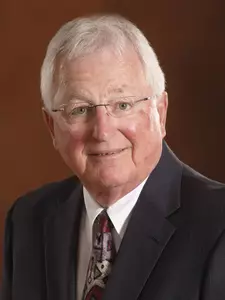
Morris Watts, A Football Life
11/9/2015 12:00:00 AM | Football
Andy Sneddon, CMUChippewas.com
MOUNT PLEASANT, Mich. - Bagging a buck can get the heart palpitating. Landing a big bass is a rush.
Nothing in the great outdoors could ever duplicate what Morris Watts got out of football.
And that's why he got back in.
Watts is in his fifth year as Central Michigan's offensive coordinator/quarterbacks coach and his 52nd in the coaching business. He has more coaching experience at the pro and college level - 43 years - than any FBS coach in the country.
He retired in 2003 after a year as the offensive coordinator at Mississippi State, then unretired three years later to take an assistant's job at Broken Arrow (Okla.) High School, where his college roommate, Ron Lancaster, was the head coach.
"I fished and hunted a lot" in retirement, says Watts. "If I shot a deer that was exciting, but it wasn't as exciting as winning a big football game."
And there have been a lifetime of big football games for Watts, who started his coaching career as an assistant at his alma mater, Seneca (Mo.) High School, in 1961.
How many games? Watts pauses, looks upward as if the answer is hiding somewhere in the ceiling tiles of his office. 700? Maybe. Give or take. Fifteen bowl games; that he knows. But who's counting?
After a year at Seneca, Watts worked as an assistant at Joplin (Mo.) High School for three years, then broke into the collegiate ranks at Drake in 1965. Watts' high school coach at Seneca, Jack Wallace, hired him and gave him the offensive coordinator title in his second year.
He stayed at Drake until 1971, then he followed a meandering path - typical of college coaches - that took him to Louisville, Indiana, Kansas, LSU, Michigan State, Miami (Ohio), the NFL and the USFL.
He had three stints in East Lansing, two at LSU. He's coached in the Big Ten, the SEC, the Big 8 (now Big 12), Missouri Valley, and the MAC.
He's coached alongside and under - as well as against -- many of the household names in college coaching. His wisdom runs deep.
Born and raised in Seneca, a farming community on the Missouri-Oklahoma border, Watts caught the sports bug early. The second of three boys born to Lester and Naomi Watts, he was a football-basketball-baseball standout at relatively small Seneca High School, and, after being named a high school All-American, accepted a football scholarship to Tulsa, where he played running back.
Watts knew, he says, by his sophomore year in high school that he wanted to coach. He admired Wallace and Seneca basketball coach Max Buzzard, and, he hoped to follow in their footsteps.
"Being around those two guys, I figured I was going to be a high school coach and that was good enough for me," Watts says.
Watts' father owned a gas station in Seneca and sold tires and appliances, among other things, out of a building next door. Lester, one of 14 children, went to school through the eighth grade then went to work on the family farm in Arkansas as was the custom for many in that part of the country in those days.
Lester, a standout left-handed pitcher, had an offer to join the New York Yankees, but his father made him turn it down. His hands, and his back, were needed on the farm.
"My dad wanted so bad for more for his boys that we were always challenged by him," says Watts. "He wanted the three boys to be successful and have more than he had growing up. He was about doing things right, being disciplined."
When Watts was a young child, there was no refrigerator or washing machine in the family home. The family wasn't poor, but it was far from wealthy.
"My folks would sacrifice and give us what we needed," Watts says. "There weren't a lot of things you needed, but what we needed, they would find a way to get for us."
Watts' competitiveness was honed on the playgrounds of Seneca long before he arrived in high school. His work ethic was instilled by his father.
"He opened that gas station seven days a week for 33 years," Watts says. "On Saturday nights everybody came to town to get their groceries and he'd stay open until midnight, 'til the last guy that he knew filled his tank and left town. And he opened at 6 o'clock every morning. He did that in case there was somebody coming through early."
That upbringing clearly paid off. Watts' older brother, Ron, retired from the Army as a three-star general; the youngest, Robert, owned and operated several highly successful businesses.
Lester had three rules for the boys: "You better not lie, you better not steal, and you better be a gentleman," Watts says. "I think that had a big influence on all three of us growing up."
As a coach, Watts has been influenced by the myriad offenses that he has seen come and go: The double wing, the wing-T, the belly option, the wishbone, the I, the spread, the west coast. You name it, he's seen it.
At Drake, which played in the Missouri Valley, Watts became smitten with the passing game. In the mid-to-late 1960s, most successful college programs were ground-oriented.
"For us to win we had to do something different, so we threw the ball," he says. "That's the only way we had a chance to really consistently stay on top of the competition, and we never had a losing season. It was different to throw the ball 30, 40 times a game and we were able to do that.
"I've always believed that you had to run the football from the time I started coaching football until now," he says, but, he adds, the passing game is critical.
There's no secret, he says, to being successful with it.
"The No. 1 thing is the talent," he says. "You win with personnel. It's hard for you to make things work if your personnel matchup is inferior to the defenses you're playing.
"Then I think it's a matter of selling your offensive philosophy to the players and getting them to buy in and perform within that structure."
Indeed. Even the best jockey in the world can't win a thoroughbred race on a donkey. The carpenter is nothing without his tools, and to be competitive, you need the right tools.
And competing is what it's always been about for Watts.
"That's one of the things that keeps you in it -- you loved the competition as a player and coaching now becomes an extension of that," he says. "You're trying to teach (the players) a system and you're trying to teach them the fine points of it to see how far you can take them.
"And then watching those kids grow and get better. Its something you really cherish.
"The excitement that builds up, the competition, and then it's real high (win) or real low (lose). That only lasts for a few days and then your back in here working on the next opponent."
Watts has been married to Marlene for 54 years. They have two adult children, three grandchildren. At 77, Watts says he's not sure how long he'll stay in, not that anybody is holding the door open for him to leave.
The bucks will still be in the woods, the fish in the lake. Watts is happy on the field, breaking down film, mentoring a quarterback.
"Every year I say to myself, bust your rear end because this might be your last year," he says. "I've worked with guys who don't contribute. I don't want to end on that note, a tired old man. I don't want that. I want to beat that out the door."