

Central Michigan University Athletics
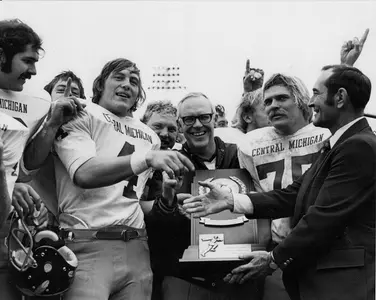
Roy Kramer: Set the Standard and Raised the Bar in Intercollegiate Athletics
12/5/2025 2:24:00 PM | Football, General, Our Stories
SEC ReleaseKramer Inducted into NFF Hall of Fame1974 National Champions HonoredHall of Fame VideoNFF Hall of Fame Press ConferenceNFF Hall of Fame Bio
Central Michigan mourns the loss of legendary football coach Roy Kramer; Kramer will always be a treasured member of this community and university family.
Roy Kramer, a giant in Central Michigan Athletics lore, is remembered as a visionary, a pioneer, a leader, a great football coach, an educator, and a gentleman.
Kramer died Thursday in his home state of Tennessee. He was 96. He is survived by three children, Steve, Sara Gray and Jane, and six grandchildren. His beloved wife of 62 years, Sara Jo, died in 2013.
Kramer led the Central Michigan football program from 1967-77, compiling an 83-32-2 record for a 71.8 win percentage. His 1974 team finished 12-1 and won the NCAA Division II national championship, the only national team championship in Central Michigan history.
"Roy Kramer set the standard and raised the bar in intercollegiate athletics," Zyzelewski Family Vice President/Director of Athletics Amy Folan said. "His impact is immeasurable and has been felt for decades and his legacy will continue in perpetuity. He was a titan in the college football world, and he transformed college athletics. His success as a football coach forever remains a part of the legacy of Central Michigan University, but most importantly, he will always be a treasured member of this community and university family."
He oversaw CMU football's transition to NCAA Division I-A (now Football Bowl Subdivision) and its move to the Mid-American Conference before serving from 1978-90 as athletics director of Vanderbilt University. He then became commissioner of the Southeastern Conference, serving in that capacity from 1990-2002 and was instrumental in the creation of the Bowl Championship Series, the precursor to the College Football Playoff.
Herb Deromedi joined Kramer's CMU football coaching staff in 1967 and Deromedi served as the defensive coordinator on the Chippewas' 1974 national title-winning team. Deromedi succeeded Kramer when Kramer left CMU after the 1977 season.
Both men are enshrined in the National Football Foundation College Football and Marcy Weston Central Michigan University halls of fame, the field at Kelly/Shorts Stadium is named in their honor, and both men have statues outside the Chippewa Champions Center.
"He was, probably, the one person that was instrumental in getting Central Michigan University into the Mid-American Conference," Deromedi said of the man, who was not only a mentor, but a good friend. "When he came here at the time, we did not have full scholarships in football; we had only partial scholarships."
"He had the leadership, the president, and the people involved here, with this vision to have them believe that we should be a candidate for the Mid-American Conference, and he was instrumental."
Kramer was indeed a visionary, and his ability to lead was innate, Deromedi said.
"He was extremely intelligent," said Deromedi, who can reel off Kramer's early career, beginning as a high school football coach at Battle Creek Central High School, at the drop of a hat. "He taught history in high school. There are people in East Lansing who I've met, and even though they won (a football) state championship with him, one of their claims is that he was even a better teacher than he was a coach.
Deromedi recalled that Kramer had a way with people, fellow educators and coaches, student-athletes, administrators and, particularly, the parents of players he recruited.
"His vision is legendary," he said. "He could persuade people. He was great with parents and great with players from the standpoint of getting them to want to excel. That was the key. It wasn't just about playing. He had a great way with parents."
"He was tough and demanding, but the players all knew that it was always in their best interest."
Kramer's legacy remains to this day at CMU.
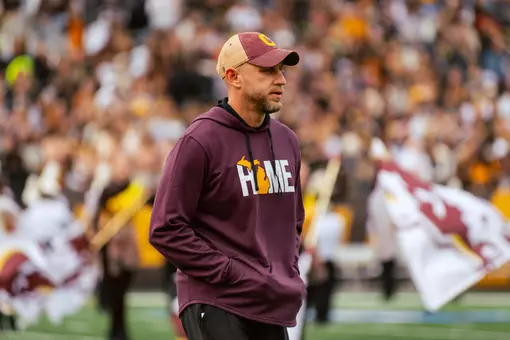
"Coach Kramer touched countless lives with his wisdom, love for the game of football, and the way he inspired the people around him," CMU football coach Matt Drinkall said. "He always made time to visit, and offer heartfelt, and helpful advice, as well as invaluable mentorship. I am truly fortunate to have gotten a chance to visit with him several times over the last year."
Drinkall recalled fondly a phone call he received from Kramer shortly after the Chippewas' 16-14 season-opening victory at San Jose State; it was Drinkall's first victory as the CMU coach.
"He stayed up until 3:15 a.m. to call me personally," Drinkall said. "He watched every snap of the game, and you could hear the excitement in his voice."
"It is impossible to measure the impact he made on Central Michigan University, the community of Mount Pleasant, and the game of college football itself. He was a truly remarkable man and leader. Coach Kramer leaves behind an incredible legacy that will live on forever."
Kramer, a native of Maryville, Tennessee, is a member five halls of fame, including Vanderbilt Athletics, the Tennessee and Alabama sports halls of fame; he received the Distinguished Eagle Scout Award and the Duffy Daugherty Award, the Distinguished American Award, and the SEC Male and Female Athlete of the Year Award is presented annually as the Roy F. Kramer Award in his honor.
Kramer died Thursday in his home state of Tennessee. He was 96. He is survived by three children, Steve, Sara Gray and Jane, and six grandchildren. His beloved wife of 62 years, Sara Jo, died in 2013.
Kramer led the Central Michigan football program from 1967-77, compiling an 83-32-2 record for a 71.8 win percentage. His 1974 team finished 12-1 and won the NCAA Division II national championship, the only national team championship in Central Michigan history.
"Roy Kramer set the standard and raised the bar in intercollegiate athletics," Zyzelewski Family Vice President/Director of Athletics Amy Folan said. "His impact is immeasurable and has been felt for decades and his legacy will continue in perpetuity. He was a titan in the college football world, and he transformed college athletics. His success as a football coach forever remains a part of the legacy of Central Michigan University, but most importantly, he will always be a treasured member of this community and university family."
He oversaw CMU football's transition to NCAA Division I-A (now Football Bowl Subdivision) and its move to the Mid-American Conference before serving from 1978-90 as athletics director of Vanderbilt University. He then became commissioner of the Southeastern Conference, serving in that capacity from 1990-2002 and was instrumental in the creation of the Bowl Championship Series, the precursor to the College Football Playoff.
Herb Deromedi joined Kramer's CMU football coaching staff in 1967 and Deromedi served as the defensive coordinator on the Chippewas' 1974 national title-winning team. Deromedi succeeded Kramer when Kramer left CMU after the 1977 season.
Both men are enshrined in the National Football Foundation College Football and Marcy Weston Central Michigan University halls of fame, the field at Kelly/Shorts Stadium is named in their honor, and both men have statues outside the Chippewa Champions Center.
"He was, probably, the one person that was instrumental in getting Central Michigan University into the Mid-American Conference," Deromedi said of the man, who was not only a mentor, but a good friend. "When he came here at the time, we did not have full scholarships in football; we had only partial scholarships."
"He had the leadership, the president, and the people involved here, with this vision to have them believe that we should be a candidate for the Mid-American Conference, and he was instrumental."
Kramer was indeed a visionary, and his ability to lead was innate, Deromedi said.
"He was extremely intelligent," said Deromedi, who can reel off Kramer's early career, beginning as a high school football coach at Battle Creek Central High School, at the drop of a hat. "He taught history in high school. There are people in East Lansing who I've met, and even though they won (a football) state championship with him, one of their claims is that he was even a better teacher than he was a coach.
Deromedi recalled that Kramer had a way with people, fellow educators and coaches, student-athletes, administrators and, particularly, the parents of players he recruited.
"His vision is legendary," he said. "He could persuade people. He was great with parents and great with players from the standpoint of getting them to want to excel. That was the key. It wasn't just about playing. He had a great way with parents."
"He was tough and demanding, but the players all knew that it was always in their best interest."
Kramer's legacy remains to this day at CMU.
"Coach Kramer touched countless lives with his wisdom, love for the game of football, and the way he inspired the people around him," CMU football coach Matt Drinkall said. "He always made time to visit, and offer heartfelt, and helpful advice, as well as invaluable mentorship. I am truly fortunate to have gotten a chance to visit with him several times over the last year."
Drinkall recalled fondly a phone call he received from Kramer shortly after the Chippewas' 16-14 season-opening victory at San Jose State; it was Drinkall's first victory as the CMU coach.
"He stayed up until 3:15 a.m. to call me personally," Drinkall said. "He watched every snap of the game, and you could hear the excitement in his voice."
"It is impossible to measure the impact he made on Central Michigan University, the community of Mount Pleasant, and the game of college football itself. He was a truly remarkable man and leader. Coach Kramer leaves behind an incredible legacy that will live on forever."
Kramer, a native of Maryville, Tennessee, is a member five halls of fame, including Vanderbilt Athletics, the Tennessee and Alabama sports halls of fame; he received the Distinguished Eagle Scout Award and the Duffy Daugherty Award, the Distinguished American Award, and the SEC Male and Female Athlete of the Year Award is presented annually as the Roy F. Kramer Award in his honor.
Saturday, October 17
Saturday, October 17
Saturday, October 17
Friday, October 16